As an Amazon Associate, I earn from qualifying purchases. This means I may earn a small commission if you buy something through the links on this page, at no extra cost to you.
🌍✨A bold tradition. A floral cup. And a story that echoes through every bean.
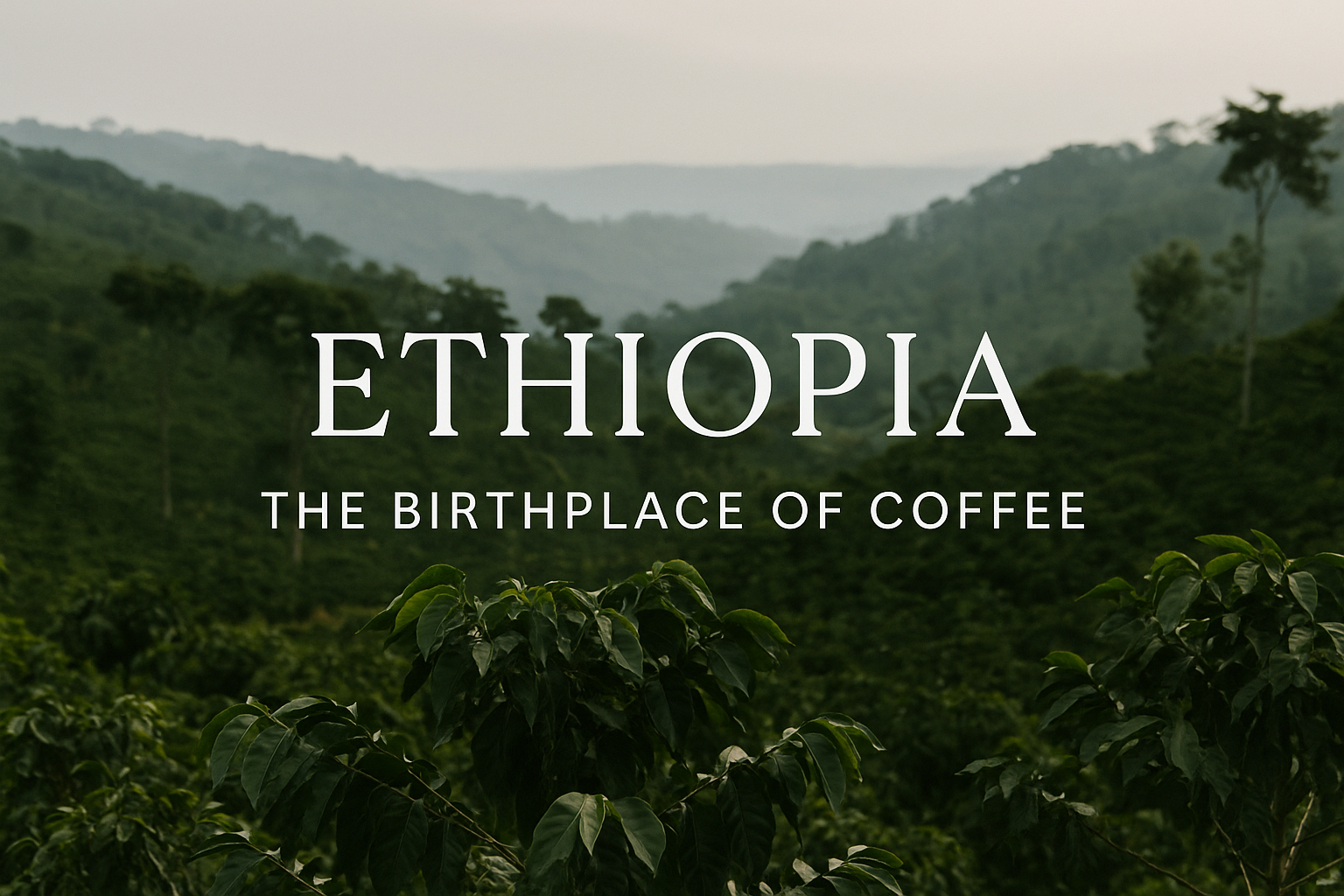
In the highlands of Ethiopia, coffee isn’t just a drink — it’s a culture, a ceremony, and a legacy. Known as the birthplace of Arabica coffee, Ethiopia offers beans with incredible complexity: floral notes, fruity brightness, and a body that dances between wild and balanced.
☕ What Makes Ethiopian Coffee Special?
- Natural & Washed Processing
Ethiopian beans are often processed naturally (sun-dried with fruit intact), creating syrupy, fruity, wine-like notes. Washed versions, on the other hand, are clean, tea-like, and delicate. - Heirloom Varieties
Unlike commercial hybrids, Ethiopia’s coffee grows from ancient, native varieties passed down through generations — meaning each region (like Yirgacheffe, Sidamo, or Harrar) has its own character. - Altitude & Climate
Grown at altitudes from 1,800 to 2,200 meters, the beans mature slowly, intensifying their flavors. The cool climate and rich volcanic soil do the rest.
🫖 Brewing the Ethiopian Way
Ethiopian beans shine in pour-over methods like V60, Chemex, or even the traditional Jebena pot. They’re perfect for slow sipping and discovering new layers in every cup.
💛 My Favorite Tools for Brewing Ethiopian Beans
These are mellow-approved and available on Amazon:
- Hario V60 Dripper – Clean, bright extraction »
- Gooseneck Kettle – Temperature control is key »
- Timemore Manual Grinder – Keep the flavor fresh »
🌄 Ethiopia x Rodlamoon
At Rodlamoon, while we cherish our Thai roots — from the misty highlands of Doi Chang and Mae Hong Son — we also celebrate global flavors that inspire us.
Tasting Ethiopian coffee reminds us of how a single origin can carry both heritage and surprise in one mellow sip.
Want to explore more origins like this?
Browse the mellow world of beans »