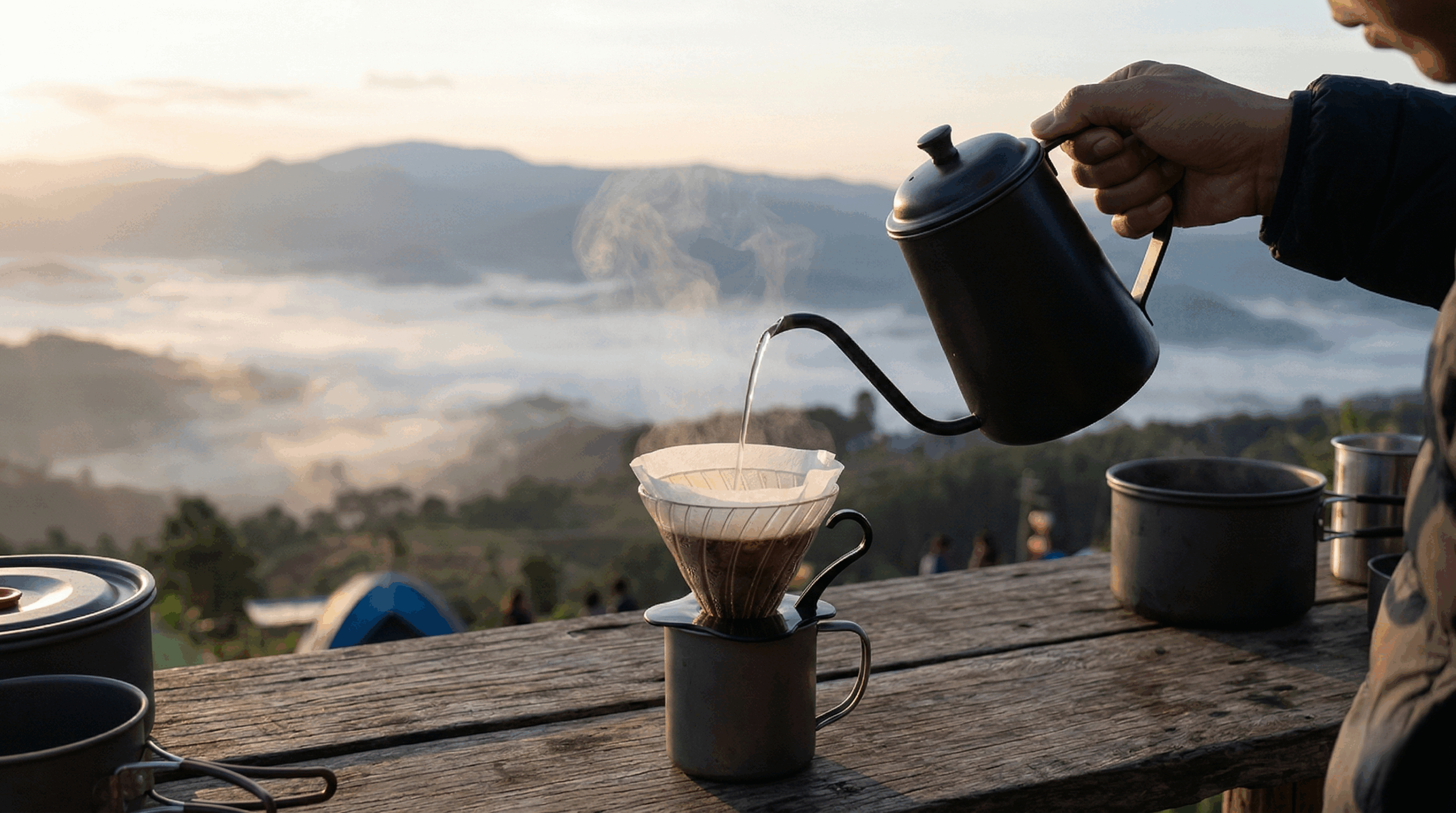
Brewing at the Rodlamoon camp, situated at an altitude of 1,700 meters in Mae Hong Son, taught me a humbling lesson about physics. When I first arrived, I couldn’t understand why my usual brewing recipe—the one that worked perfectly in the city—tasted under-extracted and sour here. The secret wasn’t in the beans; it was in the boiling point of the water.
Disclosure: As an Amazon Associate, I earn from qualifying purchases at no extra cost to you. Thank you for supporting our sincere journey at 1,700m.
The Thin Air Challenge
In the science of flavor, water temperature is the engine of extraction. However, as you climb higher into the mountains, the air pressure drops, causing water to boil at a lower temperature. At our altitude of 1,700m, water reaches a rolling boil at approximately 94°C instead of the standard 100°C.
This shift means we lose the thermal energy needed to pull those deep, sweet notes out of the coffee grounds. If you use water straight from the boil here, you are effectively brewing at a temperature that would be considered “too cool” for a light roast at sea level.
Precision in the Highlands
To maintain the sincerity of the cup, we have to compensate for this natural cooling. I’ve found that the only way to stay consistent is to monitor every single degree. Using a reliable digital thermometer became a turning point for my mountain brews. It allowed me to see exactly when the water hit the sweet spot for extraction, ensuring that the cold mountain air didn’t steal the warmth before I could finish my pour.
For those who want to take the guesswork out of the process, a high-quality temperature-controlled gooseneck kettle is a true game-changer. It provides the stability you need when the environment is working against you, giving you a steady, heated stream that respects the delicate profile of Thai specialty beans.
The Sincere Adjustment
Mastering the physics of high-altitude brewing is an act of patience. It’s about listening to the environment and adjusting our tools to fit the reality of the mountain. When you understand the “why” behind the temperature, you’re not just making coffee—you’re honoring the science that makes every sip at 1,700m so unique.
Conclusion
Don’t let the thin air discourage you. Understanding the relationship between altitude and temperature is the first step toward brewing perfection. Next time you find yourself in the mountains, remember: the water might be boiling, but the science is just getting started.